Sleep Supplements Compared: L-Theanine vs Glycine vs Apigenin vs Tart Cherry

By Olivia
Aug 16, 20265 min read
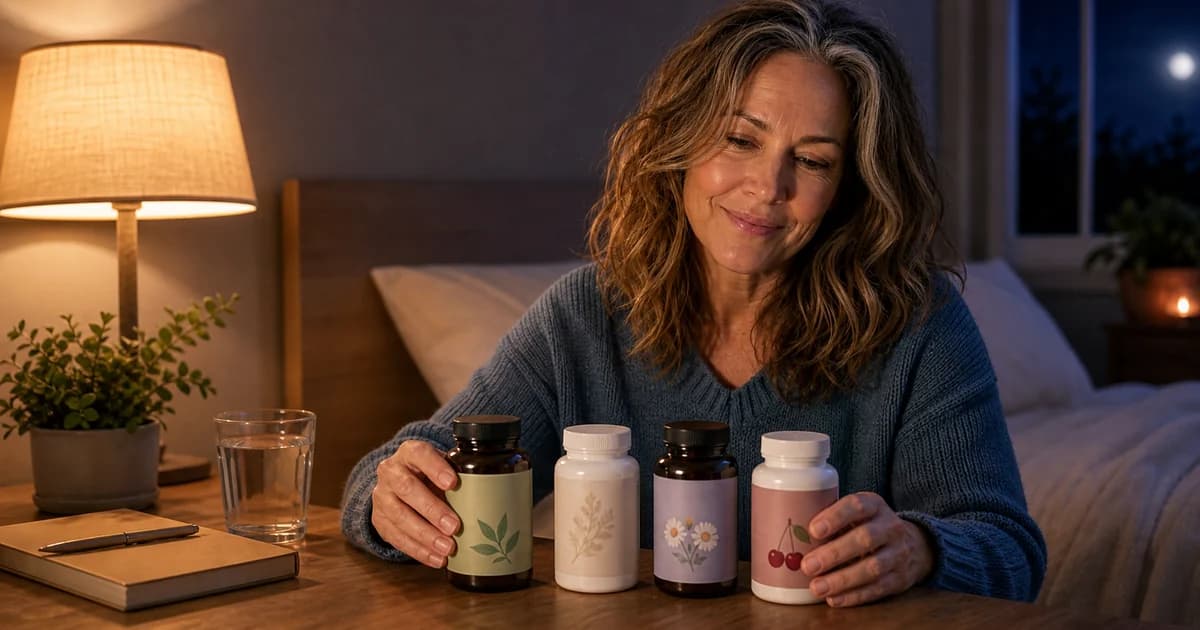
Once I had sorted out the magnesium question, I assumed the rest would be easy. It was not. I still had four bottles in the cabinet, each with a calm-looking label and a claim I could not evaluate: L-theanine for relaxation, glycine for deeper sleep, apigenin for winding down, tart cherry for the body clock.
So I built the same kind of chart I had built for magnesium: what each one is actually supposed to do, what the research really supports, and what it will not fix. The honest headline is that these sit on much smaller studies than the marketing suggests, and the differences between them matter less than matching one to the part of the night that is broken.
What you'll get from this:
- A plain-English comparison of four common sleep ingredients
- Which ones target falling asleep versus staying asleep
- The label and interaction checks I do before adding anything
Most of these ingredients rest on small, short trials rather than large randomized ones. The National Center for Complementary and Integrative Health notes that evidence for many herbal and dietary sleep aids is limited or inconsistent, and an ingredient that shortens the time it takes to fall asleep may do nothing at all for the 3 AM part of the problem.
Not sure whether your problem is falling asleep or staying asleep? The quiz sorts that out before you spend money on the wrong shelf.
Find your sleep type — free 60-sec quizMatch the ingredient to the broken part of the night
This was the reframe that saved me money. Falling asleep and staying asleep are two different problems, and most people buy for the first while suffering from the second. My own issue was almost entirely the second, which meant half the products I had tried were never going to help me no matter how long I stayed consistent.
I also stopped stacking. When I took three new things at once and slept better, I learned nothing, because I had no idea which one to keep. Now I test one ingredient at a time for two weeks, at a steady dose, with the same wake time, and I write down what happened. Boring, but it is the only way I have found to get a real answer.
My sleep supplement comparison chart
Four common ingredients, four different jobs, and none of them a replacement for the routine underneath.
L-theanine
Why: An amino acid found in tea, usually chosen for the wired-but-tired feeling rather than for sedation. Small trials suggest it may support relaxation and sleep quality, but the studies are short and the effect is subtle.
How: I treat it as a calm-down aid for racing-mind nights, not a sleeping pill, and I do not expect it to hold me asleep at 3 AM.
Glycine
Why: An amino acid studied in very small trials where people taking it before bed reported falling asleep faster and feeling less tired the next day. Promising, but the sample sizes are tiny and mostly from one research group.
How: If I test it, I take it shortly before bed and judge it on next-morning grogginess rather than on how the night felt in the moment.
Apigenin (chamomile)
Why: The compound behind chamomile's reputation. Reviews find modest and inconsistent effects on sleep quality, and chamomile is in the ragweed family, which matters if you have those allergies.
How: I use it as tea, as part of the wind-down ritual, and I count the warm cup and the dim light as part of the effect rather than pretending it is pharmacology.
Tart cherry
Why: One of the few food sources containing measurable melatonin, studied in small trials for sleep duration in older adults. The juice also carries real sugar, which is worth counting on an evening plate.
How: I prefer it as a small evening portion rather than a large glass of juice, and I do not expect it to work like a timing dose of melatonin.
The label and interaction check
Why: Supplements are not reviewed for effectiveness before sale, doses vary widely between brands, and several of these interact with sedatives, antidepressants and blood thinners.
How: Before adding anything I check the actual dose per serving, look for third-party testing, and run the list past a pharmacist alongside everything else I take.
Want the routine that goes underneath the bottles?
Get the free Sleep Reset Checklist (PDF), a one-page guide to the habits worth testing before and alongside any supplement. Sent to your inbox, instant download.
The bottom line
L-theanine and apigenin sit on the calm-down side, glycine and tart cherry aim more at sleep quality and timing, and all four rest on smaller evidence than their labels imply. Pick the one that matches the part of your night that is actually broken, test it alone, and keep the routine underneath it.
Free sleep assessment
Which part of your night is actually breaking?
Take the free 60-second quiz to find your sleep type and what to fix first.
Take the free sleep quizFree · No signup · Results in 60 seconds
Related articles
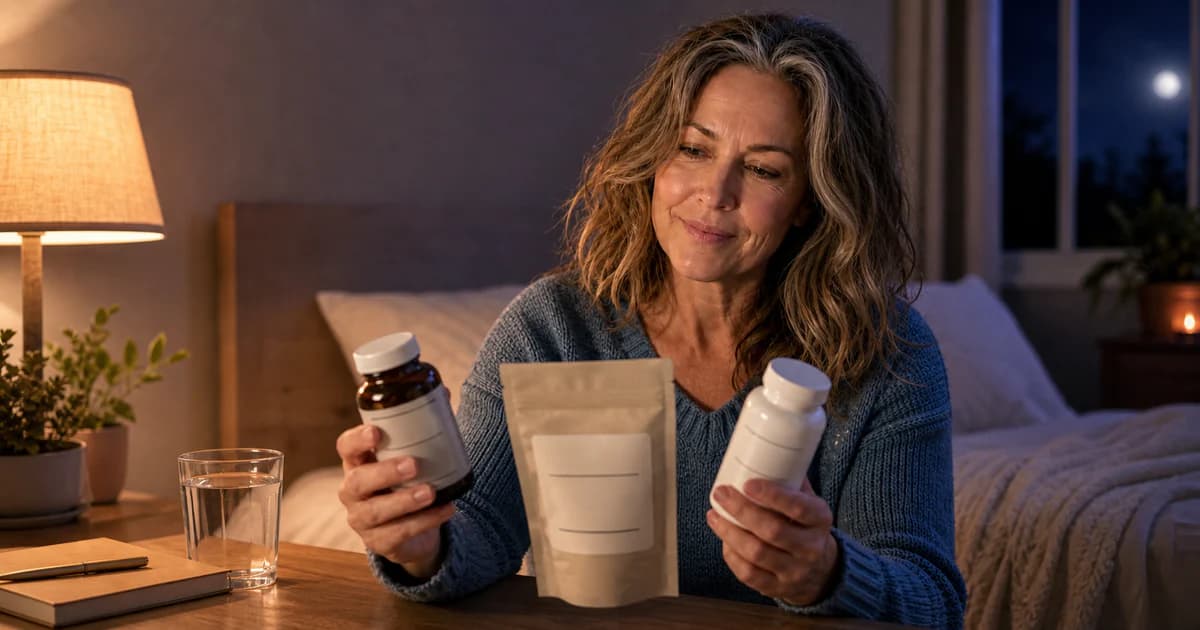
Magnesium Types and Uses Chart for Sleep: Glycinate vs Citrate vs Threonate
I was in the supplement aisle holding three magnesium bottles that all promised calm. My doctor taught me to compare the form, elemental amount and actual evidence before choosing one.
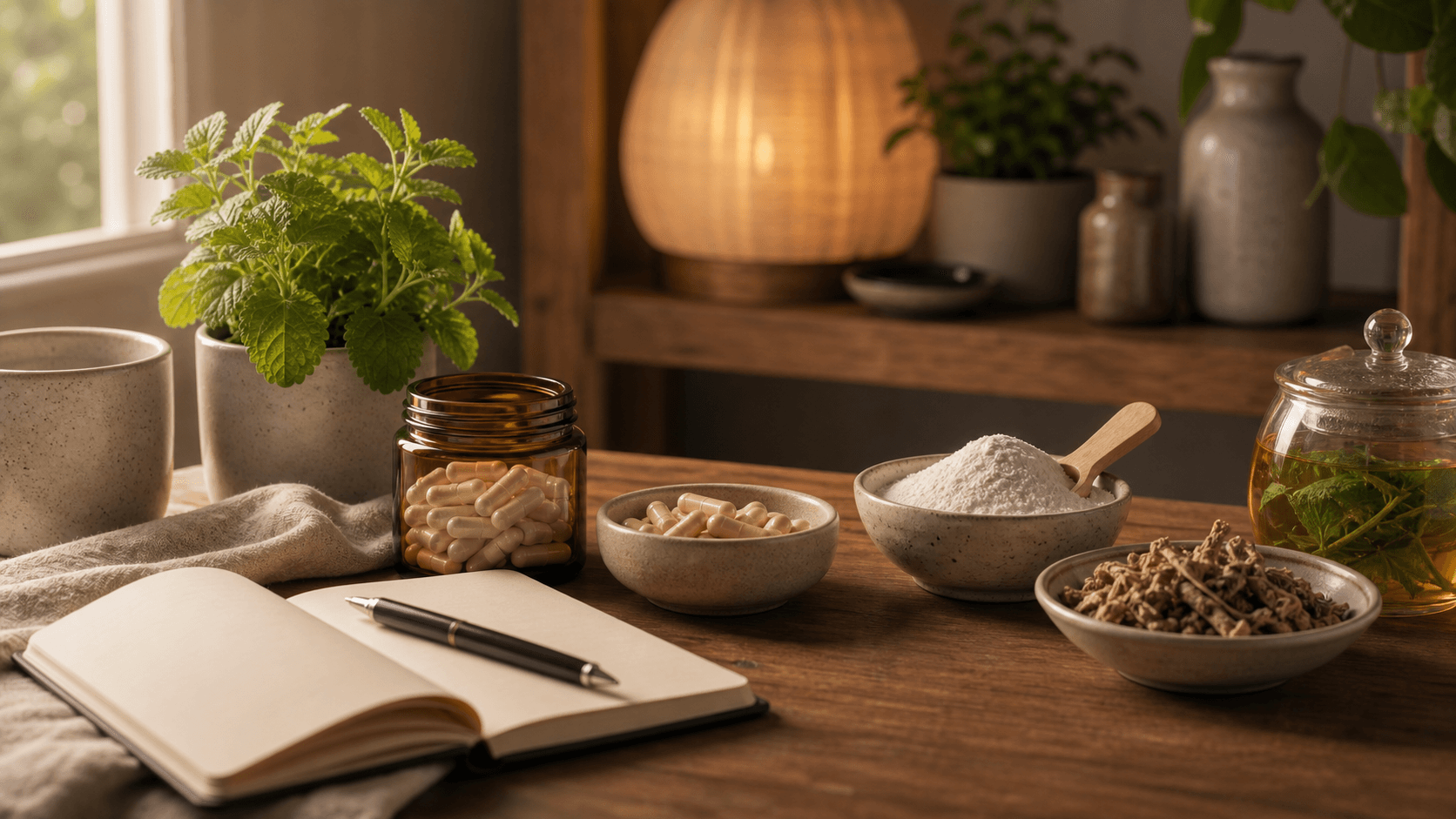
5 Natural Sleep Aids I Tried Before Melatonin (And What Actually Worked)
Before melatonin became my default, I worked through 5 natural sleep aids over six months — magnesium, l-theanine, valerian, lemon balm, glycine. Two changed my nights. Two didn't. One surprised me.
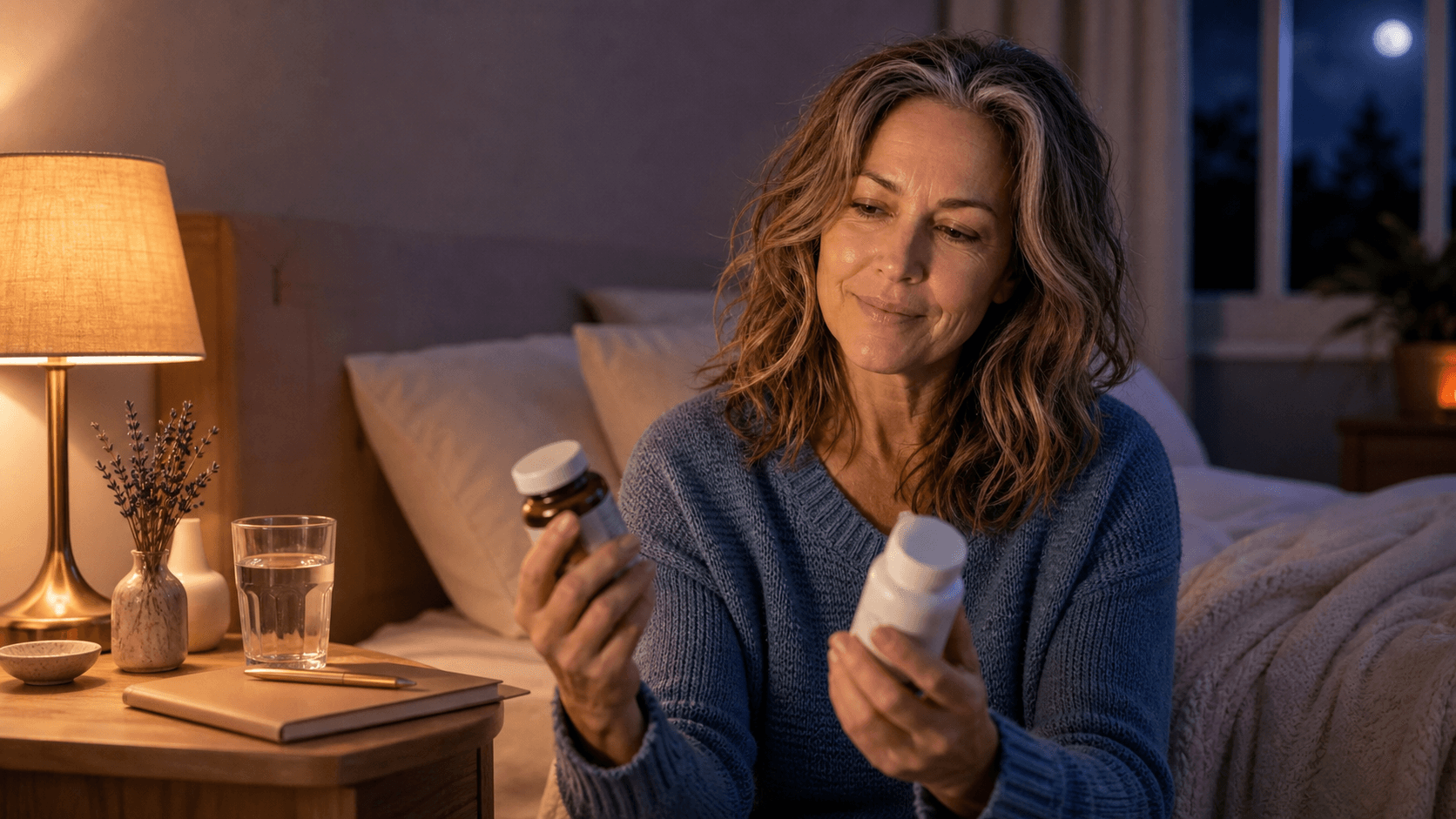
Magnesium for Sleep: Which Type Actually Works (And Which Wastes Your Money)
I stood in the supplement aisle with two magnesium bottles in my hand, both promising better sleep. A sleep doctor later told me the form matters more than the dose — here's the one that actually changed my nights.
Note: This is my personal experience, not medical advice. Talk to a qualified professional before adding any sleep supplement if you take antidepressants, sedatives, blood-pressure or blood-thinning medication, are pregnant or breastfeeding, or have liver or kidney disease.