Hot Flash Sleep Tricks: What Actually Cools Me Down

By Olivia
Jul 29, 20264 min read
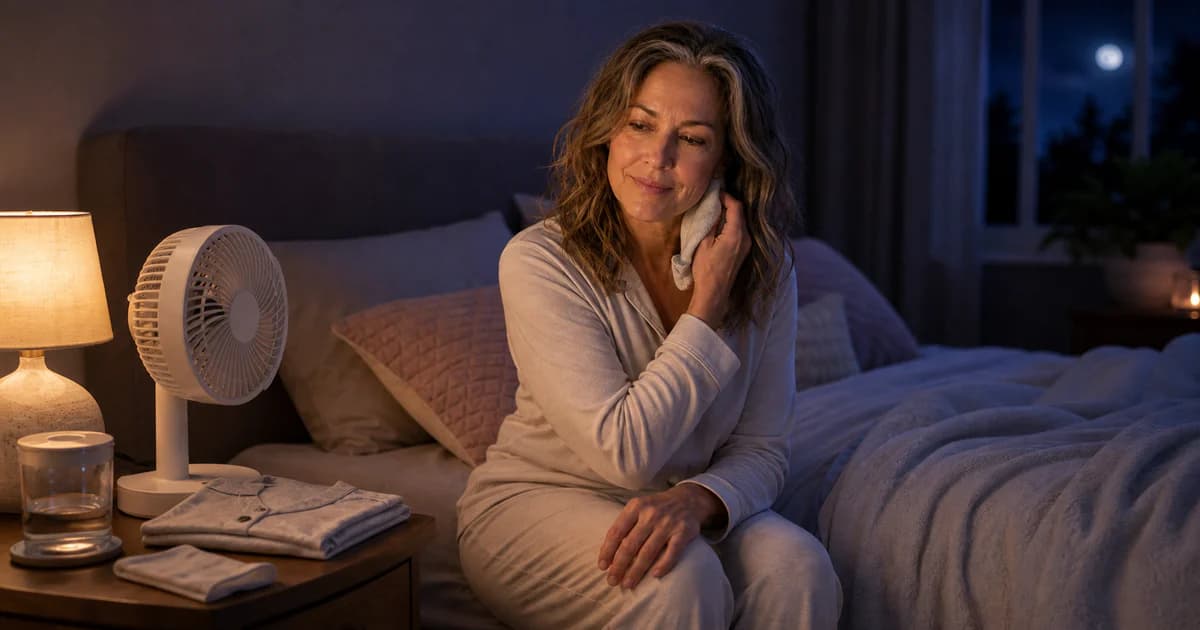
At 2 AM I had a ridiculous little routine: throw off the duvet, fan my pajama top, get cold, pull everything back on, then wake again because the damp fabric had turned icy. I was solving the heat wave and creating a cold, clammy second problem ten minutes later.
My doctor helped me think in layers and recovery, not just cold. The goal was to cool quickly without fully waking, then get dry and comfortable just as quickly. These are the six changes that made my setup work. They manage the moment; frequent or severe night sweats still deserve a real treatment conversation.
What you'll get from this:
- A cooling setup you can operate half asleep
- How to handle both the heat wave and the chilly rebound
- The point when lifestyle tricks should become a doctor conversation
The National Institute on Aging notes that night sweats can disrupt sleep and suggests layers, a fan and trigger awareness. ACOG says systemic estrogen is the most effective medical treatment for hot flashes and night sweats, when appropriate for the individual.
Not sure whether temperature is the main reason you wake, or one piece of a larger pattern? The quiz helps sort the clues.
Find your sleep type — free 60-sec quizCool the microclimate, not just the whole room
Lowering the thermostat helped, but it did not solve everything. The heat was trapped against my skin by one thick duvet and damp fabric. Once I changed the small climate inside the bed, I could respond to a flash in seconds instead of turning on lights and rebuilding the entire bed.
I also tracked patterns for two weeks. Wine was a reliable trigger for me; spicy food was not. That mattered because generic lists had me removing everything at once. A short log showed me what was actually worth changing and what was just internet folklore in my case.
6 hot-flash sleep tricks in my setup
Arrange everything before lights out. The less thinking I do during a flash, the faster I settle again.
Three light layers, not one heavy duvet
Why: Separate layers let me remove a little insulation without exposing my whole body to a cold room.
How: I use a breathable sheet, light blanket and small throw, each easy to move with one hand.
Fan across the bed, not at my face
Why: Airflow helps sweat evaporate, but direct air on my face wakes and dries me out.
How: I angle a quiet fan across my torso on a low setting and keep the control within reach.
A dry-change kit
Why: Staying in damp fabric prolongs the cold rebound and makes it harder for me to settle.
How: A clean top and small towel live in the bedside drawer so I can change without turning on a bright light.
A cool cloth in an insulated pouch
Why: Cooling my neck and upper chest feels faster than making the whole room uncomfortably cold.
How: I use a cool, not painfully icy, damp cloth for a minute and keep a barrier between skin and any cold pack.
A few sips of cold water
Why: A dry mouth can keep me alert after the heat has passed, while a huge drink creates a bathroom trip.
How: I keep a small covered glass nearby and take two or three sips rather than finishing it automatically.
A two-week trigger log
Why: Alcohol, caffeine, spicy food and heat affect women differently, so my own repeat pattern matters most.
How: Each morning I note flashes, room setup and the previous evening's likely triggers, then change one variable at a time.
Want a calmer bedroom reset in one page?
Get the free Sleep Reset Checklist (PDF), including the room, light and routine changes that protect sleep. Sent to your inbox, instant download.
The bottom line
My best setup handles both halves of a night sweat: fast airflow and fewer layers for the heat, then dry fabric and easy coverage for the rebound. If flashes keep breaking sleep, cooling tricks are comfort, not the end of the medical conversation.
Free sleep assessment
Are hot flashes the whole problem, or one sleep trigger?
Take the free 60-second quiz to find your sleep type and what to fix first.
Take the free sleep quizFree · No signup · Results in 60 seconds
Related articles
Menopause Insomnia: Why Sleep Gets Worse After 45 (And What Helped Me)
The year I turned 46, my sleep changed personality: night sweats at 2 AM, wide awake at 3. My doctor's one-line explanation reframed everything, and these 5 adjustments gave me my nights back.

Why You Wake Up at 3 AM Every Night (And How I Finally Stopped)
For two years I snapped awake at 3 AM, wide-eyed and wired. A sleep specialist explained what my body was actually doing — and the 5 small changes that kept me asleep until morning.
5 Cozy Bedroom Changes That Quietly Improved My Sleep
My bedroom looked beautiful. It also wasn't helping me sleep. An interior designer who works with sleep specialists walked through and pointed at 5 things — and within a week my nights felt different.
Note: This is my personal experience, not medical advice. Talk to a qualified professional before assuming new, drenching or persistent night sweats are menopause-related, or choosing hormone or nonhormone treatment without reviewing your personal risks.