5 Bedtime Habits That Quietly Sabotage Your Sleep (I Did All of Them)

By Olivia
Jul 14, 20264 min read
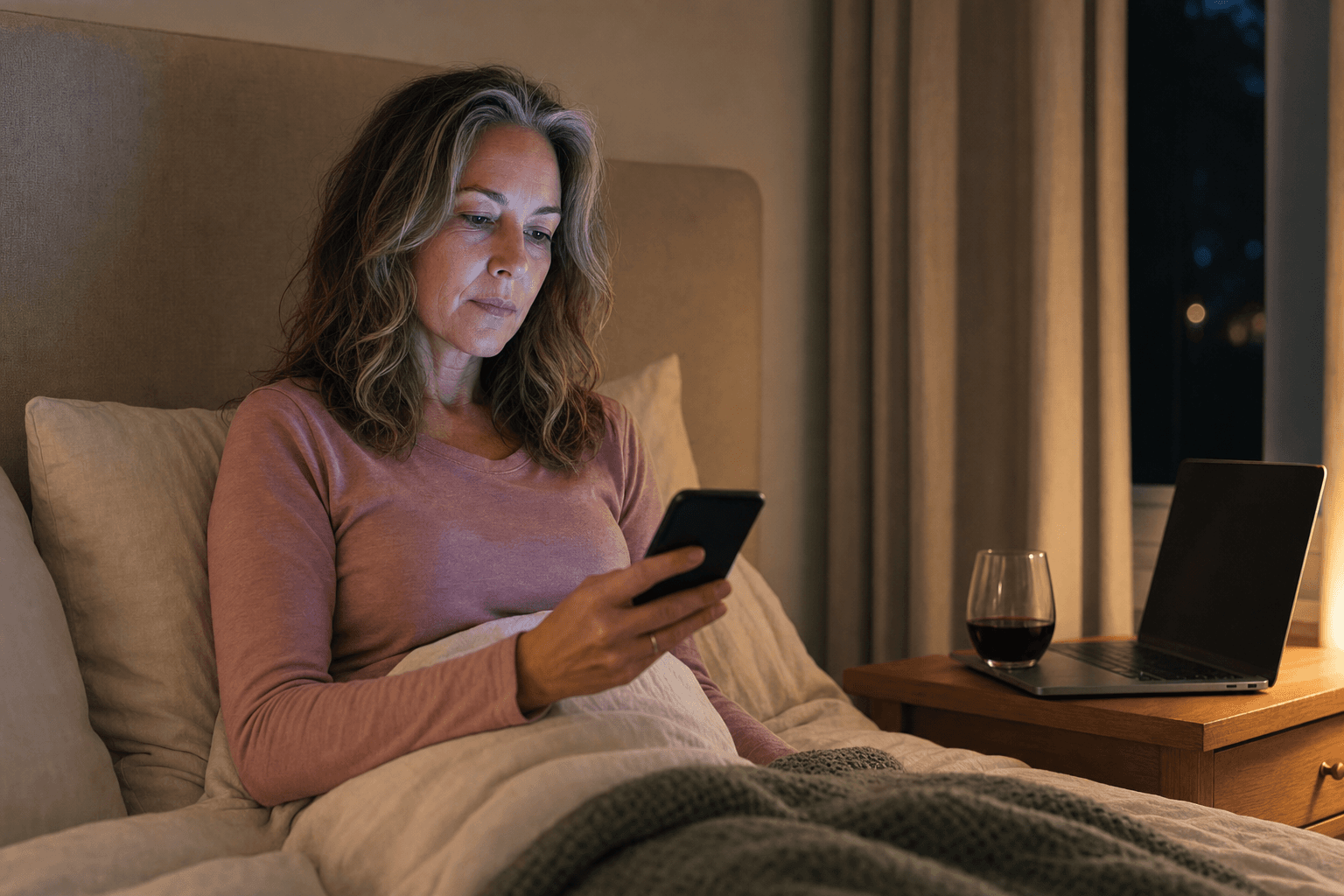
For years my 'bedtime routine' was answering one last email, pouring one last glass, and scrolling in bed until my eyes stung. Then I'd lie in the dark, genuinely surprised that my mind was still at the office. I assumed I was just a bad sleeper.
A sleep coach I finally talked to didn't give me a new supplement or a fancy tracker. She went through my last hour of the day and found five habits quietly working against me. 'You're not bad at sleeping,' she said. 'Your evening is competing with it.' Here are the five, and the swap that made each one painless.
What you'll get from this:
- The 5 evening habits that sabotage sleep without feeling harmful
- Why each one works against you, in one plain sentence
- A like-for-like swap for each, so nothing feels like discipline
Sleep researchers talk about 'sleep effort': the harder you chase sleep, the further it moves. Most of what sabotages a night happens in the hour before bed, which is also why small changes to that hour tend to pay off faster than anything you do at 3 AM.
Recognized yourself in more than one? The quick quiz tells you which habit is doing the most damage to your nights.
Find your sleep type — free 60-sec quizWhy the last hour decides the whole night
Falling asleep isn't an on-off switch, it's a landing. Your brain needs a descent path: dimming light, cooling body, slowing thoughts. Each of the habits below either keeps the engines running (light, alcohol, work mode) or teaches your brain that bed is a place to be alert.
The coach's rule of thumb stuck with me: whatever you do in the last hour, you're training tomorrow night too. That's the bad news and the good news, because it means a better week is five small swaps away.
The 5 habits (and their painless swaps)
Don't fix all five tonight. Pick the two you recognized yourself in.
The one-last-scroll in bed
Why: Bright light plus an endless feed spikes alertness at the exact moment you need the descent.
How: My phone now docks in the kitchen at 9:30. The charger lives there, so the decision is already made.
The nightcap
Why: Alcohol sedates you into the first half of the night, then fragments the second half as it clears.
How: Last drink at least three hours before bed. In the evening I pour the fancy herbal tea instead, same ritual, same glass-in-hand feeling.
Working until lights-out
Why: Going from problem-solving to pillow in sixty seconds leaves the problem-solving loop running all night.
How: Laptop closes before I brush my teeth, no exceptions. Even a ten-minute buffer changes the landing.
Keeping the bedroom cozy-warm
Why: Your core temperature has to drop to reach deep sleep. A toasty room holds you in light, wake-prone sleep.
How: Cooler than feels cozy, around 65°F, plus a lighter duvet. Cold room, warm bed is the combination.
Going to bed before you're sleepy
Why: Lying awake 'to get a head start' teaches your brain that bed is a place for waiting, not sleeping.
How: I wait for real sleepiness cues: heavy eyes, slow blinks. And if I'm wired after 20 minutes, I get up and sit somewhere dim until I'm not.
Want the better-evenings checklist?
Get the free Sleep Reset Checklist (PDF), a one-page printable covering the swaps in this article. Sent to your inbox, instant download.
The bottom line
None of these habits feel harmful in the moment, which is exactly why they survive for years. Swap the scroll for a dock, the nightcap for the good tea, and give your brain a landing strip. Pick two tonight and let the week tell you.
Free sleep assessment
Which habit is costing your nights the most?
Take the free 60-second quiz to find your sleep type and what to fix first.
Take the free sleep quizFree · No signup · Results in 60 seconds
Related articles

Reset Your Sleep Schedule in 5 Days: My No-All-Nighter Plan
After one week of late nights, I tried to reset with an all-nighter and made everything worse. A sleep specialist gave me a five-day plan built around one anchor: wake time, not forced bedtime.
5 Cozy Bedroom Changes That Quietly Improved My Sleep
My bedroom looked beautiful. It also wasn't helping me sleep. An interior designer who works with sleep specialists walked through and pointed at 5 things — and within a week my nights felt different.

The 10-Minute Wind-Down Routine That Finally Got Me to Sleep
I used to go from laptop to lights-out in 60 seconds and wonder why my brain wouldn't switch off. Here's the 10-minute, no-rules wind-down a sleep coach gave me — and why it works.
Note: This is my personal experience, not medical advice. Talk to a qualified professional before changing anything if your sleep problems are severe or ongoing.